


Most organisations do not struggle because they lack strategy. In many cases, the vision is clear, the objectives are well defined, and the resources required for success are readily available. Yet despite meticulous planning and significant investment, productivity declines, employee engagement weakens, customer satisfaction declines, and business results fail to meet expectations. This persistent gap between strategy and performance raises an important question: if the strategy is sound, where does the problem lie?
A recent conversation with a senior executive offered a compelling answer. Following the loss of a major client relationship that had taken years to build, the organisation’s leadership team convened to understand what had gone wrong. On the surface, nothing appeared unusual. The company had skilled professionals, experienced managers, robust systems, and clearly articulated business goals. However, as the discussion unfolded, a more troubling reality emerged.
The warning signs had been present long before the client walked away. Reports submitted to management lacked clarity and insight. Important conversations about performance were postponed or avoided altogether. Teams operated independently, with little alignment or collaboration. Customer concerns were neither escalated nor addressed in a timely manner. Presentations failed to persuade stakeholders despite containing sound recommendations. Leaders found themselves spending more time reacting to problems than preventing them.
The issue was not a lack of intelligence, effort, or ambition.
The issue was capability.
The organisation had invested significantly in technical knowledge and operational systems, yet critical professional competencies had been overlooked. Communication was ineffective. Accountability was inconsistent. Leadership capability was underdeveloped. Decision-making lacked rigour. Customer engagement was transactional rather than strategic. Gradually, these seemingly minor deficiencies accumulated, creating consequences that extended far beyond individual performance.
This challenge is not unique to one organisation. It is a reality faced by many businesses across industries and sectors.
The most expensive organisational problems are often not visible on a financial statement. They exist in the form of missed opportunities, delayed decisions, declining customer loyalty, workplace conflict, disengaged employees, and ineffective leadership. They reveal themselves through projects that fail to gain momentum, talented employees who struggle to influence others, managers who find it difficult to drive accountability, and organisations that repeatedly encounter the same challenges despite implementing new strategies.
What makes these issues particularly costly is their cumulative effect. A poorly written report may appear insignificant in isolation, but if it results in a delayed decision, a missed opportunity, or an uninformed stakeholder, the consequences can be substantial. Similarly, a manager who avoids difficult conversations may preserve short-term harmony, but over time that reluctance can erode standards, reduce productivity, and weaken organisational culture.
In today’s increasingly complex business environment, technical expertise alone is no longer sufficient. Organisations require professionals who can communicate with clarity, think critically, solve problems effectively, and lead with confidence. They need leaders who can navigate uncertainty, build trust, and inspire high performance. They need employees who understand accountability, customer experience, collaboration, and personal effectiveness. These capabilities are often described as “soft skills”, yet their impact on organisational outcomes is anything but soft.
Indeed, some of the most successful organisations in the world recognise that communication, leadership, critical thinking, personal effectiveness, and customer service are strategic capabilities. They understand that sustainable success is not determined solely by products, processes, or technology. It is driven by people and their ability to execute consistently at a high level.
This understanding is more important than ever as organisations navigate a workplace characterised by rapid technological change, shifting customer expectations, and multigenerational workforces. Leaders are expected to influence rather than command. Teams must collaborate across functions and generations. Professionals are required to communicate with greater precision, think more critically, and adapt more quickly than ever before.
For this reason, investing in people development is no longer optional. It is a business imperative.
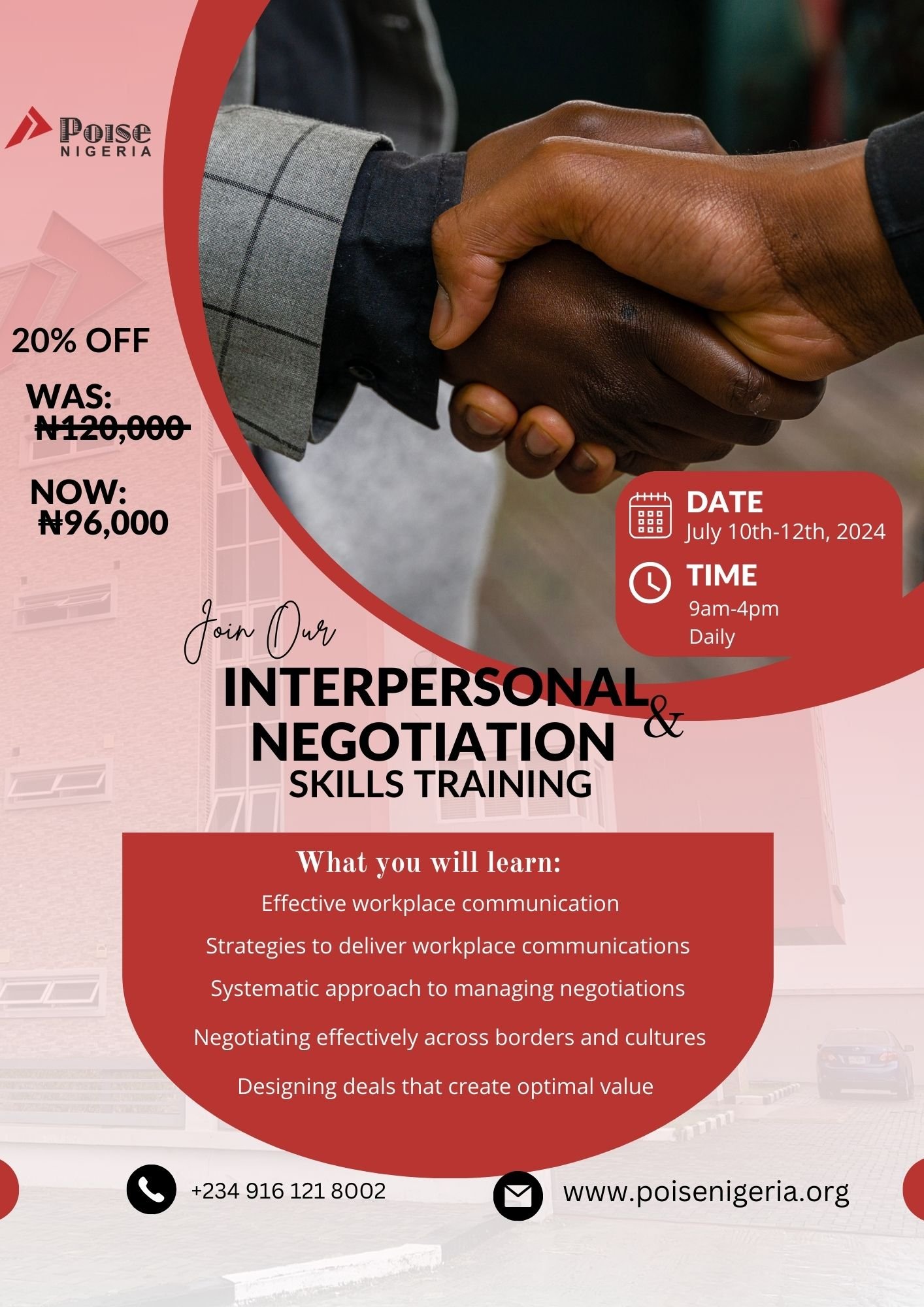
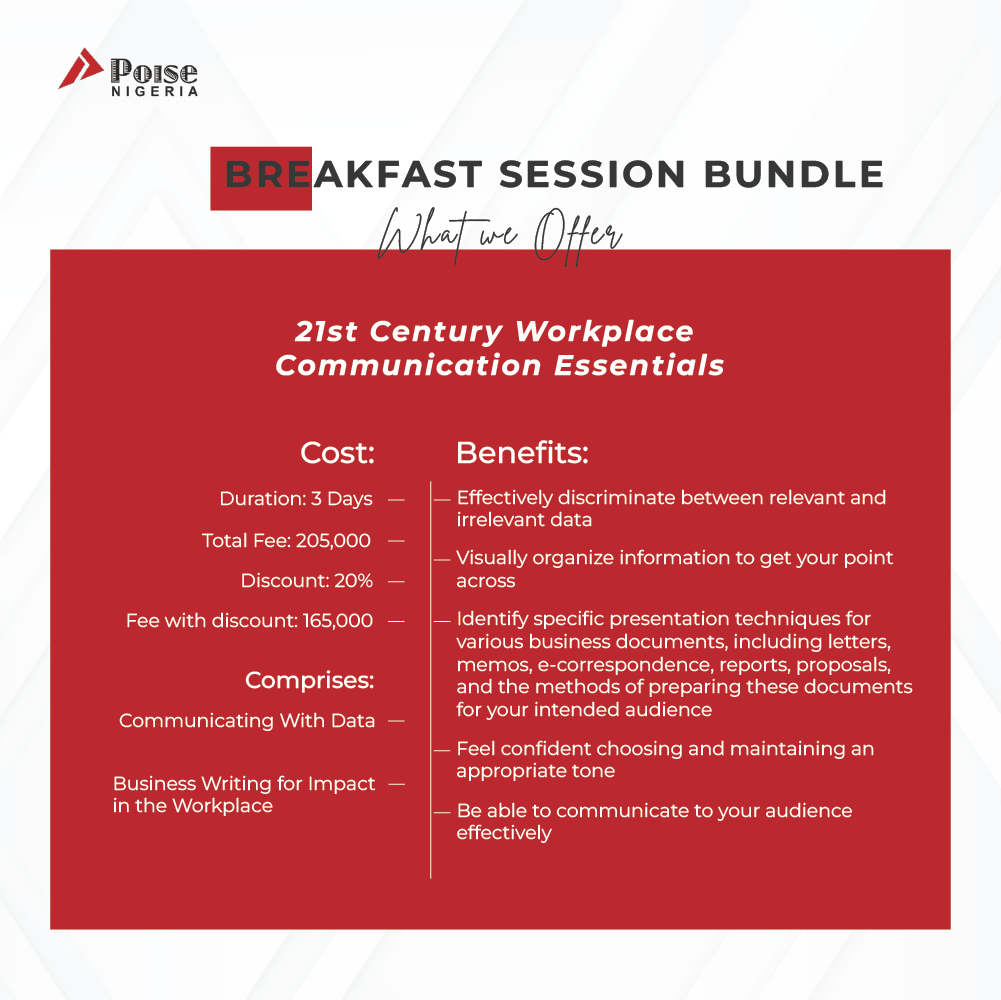
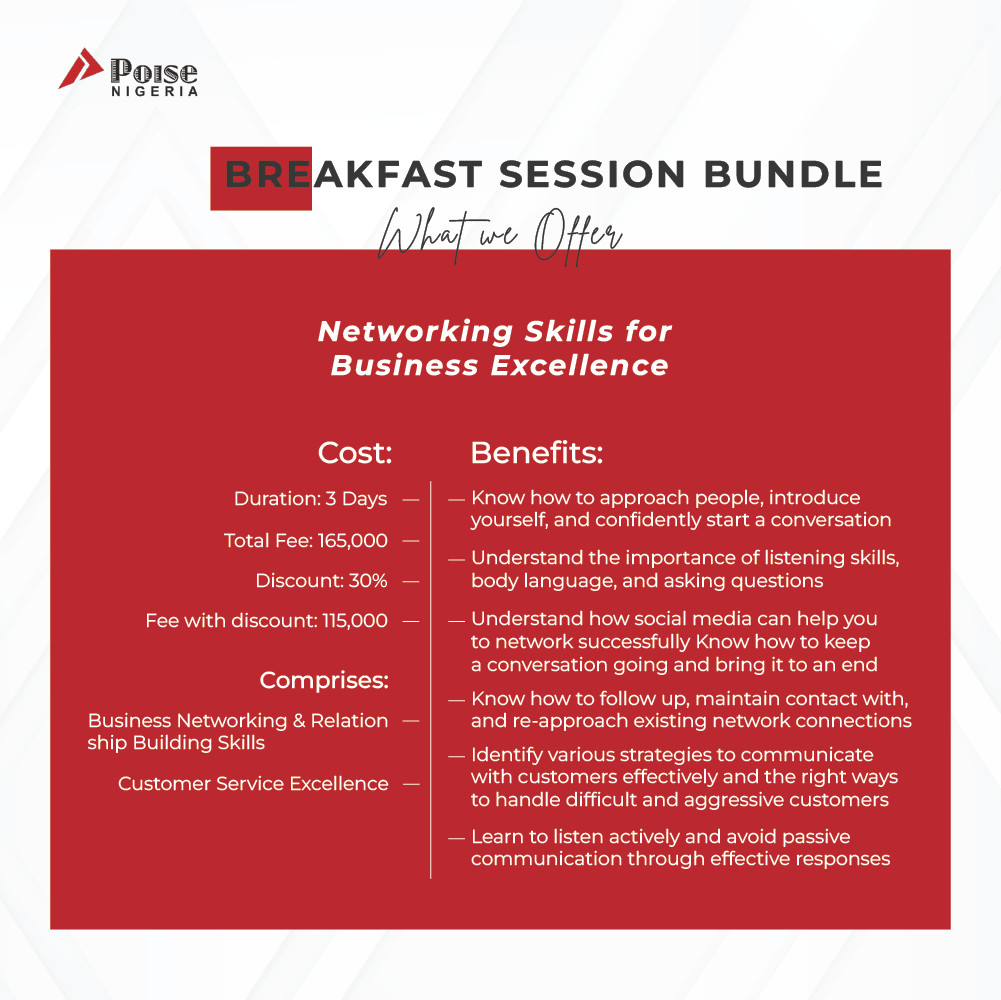
Recognising these evolving workplace realities, Poise Nigeria has developed a suite of professional development programmes designed to equip individuals and organisations with the competencies required to thrive in today’s environment. From Elocution and Public Speaking to Critical Thinking and Problem-Solving Skills, from Business Writing Excellence to Crisis Leadership and Strategic Communication, each programme addresses a capability that directly influences organisational performance. Other offerings such as Improving Employee Performance and Accountability, Cross-Generational Leadership in the Workplace, Customer Service Excellence, and Personal Effectiveness and Self-Mastery Skills focus on strengthening the human factors that drive business success.
These programmes are not simply about acquiring knowledge. They are about developing behaviours, mindsets, and practical skills that translate into measurable workplace impact. They help professionals communicate more effectively, lead more confidently, build stronger relationships, make better decisions, and achieve better outcomes.
As leaders reflect on the challenges facing their organisations, it may be worth considering a simple but important question:
If the strategy is clear, are your people equipped to execute it?
Too often, organisations invest heavily in developing plans while underinvesting in the capabilities required to bring those plans to life. Yet the difference between organisations that merely survive and those that consistently excel is rarely found in strategy documents alone. More often, it is found in the quality of leadership, the strength of communication, the culture of accountability, and the effectiveness of the people responsible for delivering results.
Ultimately, organisations do not rise to the level of their ambition. They rise to the level of their capability.
And capability can always be developed.
Poise Nigeria
Developing Exceptional People. Building Exceptional Organisations.